
The Notorious Book That No One In China Dares to Publish
The Fat Years by Chan Koonchung faced censorship and was banned in mainland China.


The Fat Years by Chan Koonchung faced censorship and was banned in mainland China. This favorite novel of mine, which critiques the Chinese government and raises sensitive topics related to political control and collective amnesia, was deemed politically sensitive and deemed unfit for publication within China. The ban is reflective of the Chinese government's strict censorship policies, particularly regarding literature and media that challenge or question the official narrative or present alternative perspectives on Chinese society and politics.
Set in a near-future China, the book explores themes of memory, collective amnesia, and the dangers of an Orwellian surveillance state.
In the novel, the entire population of China experiences a month-long gap in their memory, known as "the Fat Years," during which significant political events and social upheavals take place. As people start to regain their memories, only a small group of individuals remember the truth of what happened during that period. The book follows the journey of one such group as they navigate a society that seems to have willingly forgotten its recent past.
The Fat Years serves as a warning about the potential consequences of mass complacency, the manipulation of history, and the dangers of an authoritarian regime. It raises questions about the price of stability, the erosion of personal freedoms, and the power of collective amnesia.
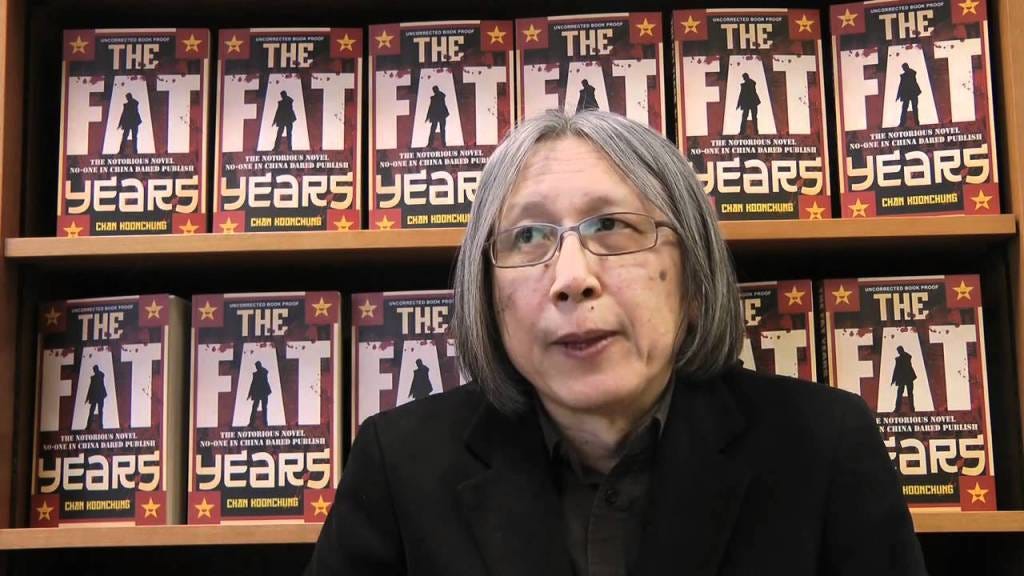
By presenting a fictional future that reflects elements of contemporary China, the novel challenges readers to critically examine the role of memory, truth, and the responsibilities of citizens in shaping society. It serves as a reminder that the preservation of collective memory and the pursuit of truth are essential for safeguarding individual freedom and holding those in power accountable.
The Fat Years offers a unique perspective on dystopia, focusing on the suppression of memory and the implications of a society that willingly embraces forgetfulness. It prompts readers to contemplate the delicate balance between individual autonomy, historical truth, and the forces that shape our collective consciousness.
You can read my other book reviews and much more on my delisted site, CBASE (formerly DNEWSHQ)
.